
Is DripDrop Good for You?
Benefits, Ingredients, and Side Effects Explained
Is DripDrop good for you? Learn how it works, its ingredients, real benefits, side effects, and when oral hydration isn't enough and IV therapy helps.
 July 13, 2026
 9 min read
 Medical Team
You've probably seen DripDrop recommended for hangovers, travel days, or that flu that's been going around the office. But is DripDrop actually good for you, or is it just another electrolyte powder riding the hydration trend? This guide breaks down what's really in DripDrop, how it works in your body, who benefits most from it, and — just as importantly — when oral hydration isn't enough and IV therapy becomes the better option.
What Is DripDrop and How Does It Work?
DripDrop is an oral rehydration solution (ORS), a category of product originally developed to treat serious dehydration from illnesses like cholera in disaster relief settings. Unlike typical sports drinks, which are formulated around athletic performance, ORS products are built around a specific ratio of sodium and glucose that helps your intestines pull water into your bloodstream more efficiently than water alone.
This mechanism is called sodium-glucose cotransport. When sodium and glucose are present together in the right concentration, they activate a transport pathway in the small intestine, dragging water molecules along with them into the bloodstream. It's the same medical principle behind oral rehydration therapy used globally to treat dehydration from diarrheal illness, and it's the foundation DripDrop was built on.
Where DripDrop differs from a typical sports drink is osmolarity — essentially, how concentrated the solution is with dissolved particles. A drink that's too concentrated can actually pull water in the wrong direction or slow absorption down, while one that's too diluted won't trigger the transport mechanism efficiently. DripDrop's formula is calibrated to stay within the low-osmolarity range recommended for oral rehydration, which is part of why it's positioned closer to a clinical hydration tool than a casual beverage.
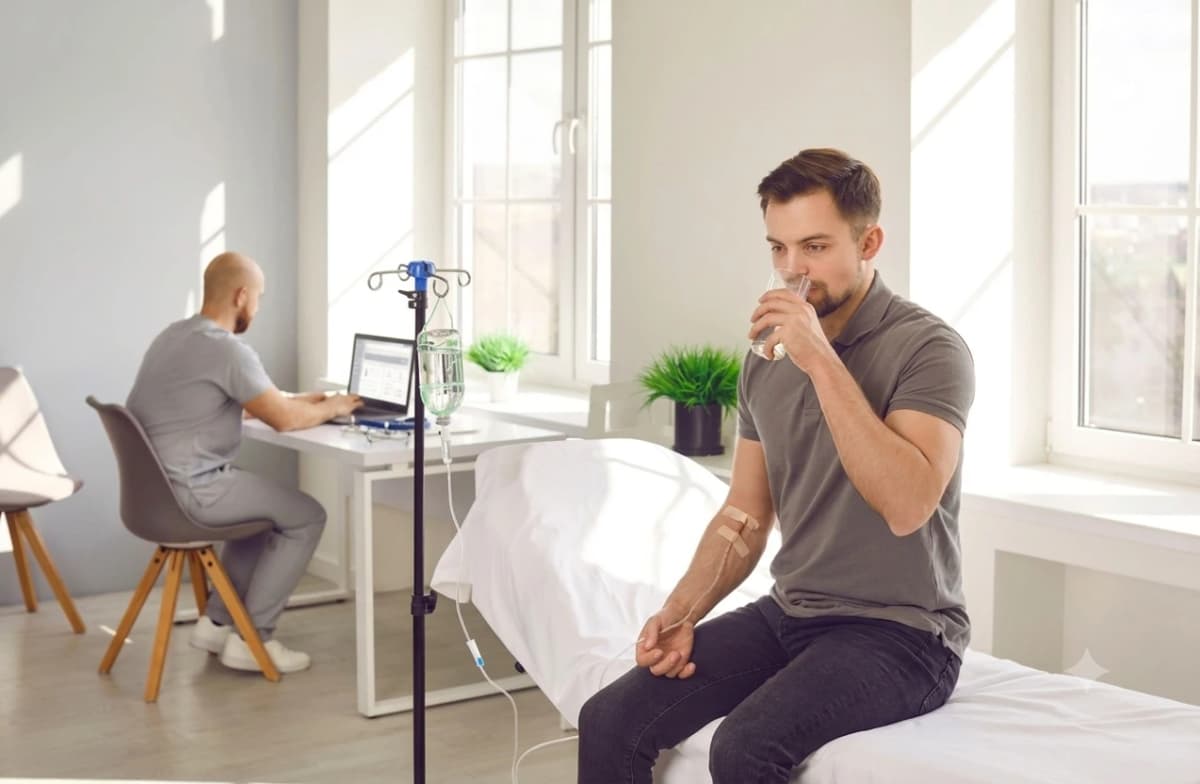
DripDrop Ingredients Breakdown
A standard DripDrop packet, mixed with about 16–17 oz of water, typically contains:
- Sodium (roughly 700 mg): The primary driver of fluid absorption and the reason DripDrop's formula sits well above most sports drinks.
- Potassium (roughly 400+ mg): Supports muscle function and helps maintain fluid balance alongside sodium.
- Magnesium: Supports nerve and muscle function, particularly relevant during recovery from illness or heavy sweating.
- Zinc and Vitamin C: Included for general immune support.
- Glucose/dextrose blend: Present in a lower ratio than typical sports drinks, calibrated to activate the cotransport mechanism without excess sugar.
Compared to a typical sports drink, DripDrop delivers meaningfully more electrolytes with less sugar — a trade-off that's intentional, since the formula is designed for rehydration rather than athletic fueling.
Benefits of DripDrop
 Faster rehydration than water alone for people experiencing genuine fluid loss from heat, illness, or alcohol.
- Lower sugar than most sports drinks, while still providing enough glucose to support absorption.
- Added electrolytes like magnesium and zinc that many competing products skip entirely.
- Convenient, portable format — no refrigeration needed, easy to carry while traveling or at work.
- Doctor-formulated foundation, built on established oral rehydration science rather than purely athletic marketing.
For people dealing with mild-to-moderate dehydration — a rough hangover, a day in the sun, a mild stomach bug, or a long flight — DripDrop can genuinely help you feel better faster than sipping plain water.

Does DripDrop Work? What the Science Says
The underlying science is well established: sodium-glucose cotransport is a real, well-documented mechanism, and oral rehydration solutions built on this ratio have been used in clinical and humanitarian settings for decades to treat dehydration. DripDrop's higher sodium concentration is designed to sit closer to that clinical range than most consumer electrolyte products, which is why it's often positioned for more serious dehydration scenarios rather than light everyday sipping.
That said, "works" depends on the situation. For mild dehydration, most people notice a real difference compared to water alone. For moderate-to-severe dehydration — persistent vomiting, high fever, heavy fluid loss — oral rehydration products can still fall short, simply because they depend on your digestive system functioning well enough to absorb what you drink.
How to Use DripDrop the Right Way
Getting the most out of DripDrop comes down to using it the way it was designed to be used, not just tossing a packet into any bottle of water. A few practical guidelines:
Follow the mixing ratio. DripDrop is formulated for a specific water volume (typically 16–17 oz per packet). Using less water makes the solution too concentrated, which can actually slow absorption and cause stomach upset.
Sip steadily rather than chugging. Drinking it over 20–30 minutes tends to be gentler on the stomach than drinking it all at once, especially if you're already feeling nauseated.
Use it at the first sign of dehydration, not after symptoms have escalated. Catching mild dehydration early — the first hint of a headache, fatigue, or thirst — is when oral rehydration works best.
Don't stack multiple servings back-to-back unless a doctor has advised it, especially if you have any sodium-sensitive health conditions.
Pair it with rest, not exercise or alcohol, when you're using it to recover from illness or a hangover.
Used this way, DripDrop functions closer to how it was clinically intended — a targeted rehydration tool rather than an everyday sports drink substitute.
Potential Side Effects and Who Should Be Cautious
DripDrop is generally well tolerated by healthy adults, but it isn't risk-free for everyone:
High sodium content means it may not be appropriate for people with high blood pressure, heart failure, or kidney disease without medical guidance.
Added sugars, while lower than many sports drinks, can still matter for people managing blood sugar or diabetes.
Overuse — drinking multiple servings daily, every day — can add up to more sodium and sugar than intended for occasional rehydration use.
Not a substitute for medical care if dehydration is severe, persistent, or accompanied by symptoms like confusion, fainting, or inability to keep fluids down.
If you fall into any of the above categories, check with a doctor before making DripDrop a regular habit.
Who Benefits Most from DripDrop?
People recovering from a hangover
Travelers dealing with jet lag or dry cabin air
Anyone with a mild stomach bug or short bout of illness
Athletes or outdoor workers dealing with heat and sweat loss
People who simply forget to drink enough water during busy days
If you fit into one of these categories and you're able to keep fluids down normally, an oral rehydration product like DripDrop is a reasonable, evidence-based first step.
When Oral Hydration Isn't Enough: Signs You May Need IV Hydration
Oral rehydration solutions work well — until your body can't cooperate with the process. If any of the following apply, a powder packet may not get you back to normal fast enough:
You can't keep water or electrolyte drinks down due to nausea or vomiting
You're dealing with severe hangover symptoms and need relief quickly, not gradually
You have flu, food poisoning, or a stomach bug causing ongoing fluid loss
You feel dizzy, lightheaded, or foggy despite drinking fluids
You need to be back to 100% before a flight, event, or workday and don't have time to wait
This is exactly where IV hydration therapy fills the gap. By delivering fluids, electrolytes, and vitamins directly into your bloodstream, IV therapy skips the digestive system entirely — so you're not depending on your gut to absorb anything. Most sessions take 30–45 minutes and are administered by licensed, board-certified registered nurses.
Our mobile IV therapy team brings hospital-grade hydration directly to your home, hotel, or office anywhere in Los Angeles. If oral hydration alone isn't getting the job done, and get back to feeling like yourself, faster.
FAQs About DripDrop
More From Our Blog
Whether you're new to IV therapy or a wellness regular, these
reads will help you learn, recharge, and feel empowered.
Is DripDrop Good for You? Benefits, Ingredients, and Side Effects Explained
Is DripDrop good for you? Learn how it works, its ingredients, real benefits, side effects, and when oral hydration isn't enough and IV therapy helps.

DripDrop vs Liquid I.V.: Which Hydration Powder Is Better?
DripDrop vs Liquid I.V. — compare electrolytes, sugar, and absorption science to see which hydration powder wins, and when IV hydration works faster.

Myers Cocktail IV: The Original Wellness Drip for LA Residents
Discover how Myers Cocktail IV therapy supports hydration, energy, and wellness. Learn why LA residents choose Myers Cocktail IV therapy and IV therapy Glendale services.
Bringing Wellness Near You
From here to everywhere — we ship the fun worldwide!





IV Therapies
Copyright © 2026. Liquid life. All rights reserved. Terms of service. || Privacy Policy. | Sitemap
Follow Liquid Life:


Follow Liquid Life: